

A SAINT FOR ADVENT
JOHN OF THE CROSS
ADVENT, REALLY?
I once knew a priest who worked at St Paul’s cathedral. He enjoyed smoking a pipe and one Christmas Eve went down to his tobacconist in one of the side streets. The shop had not one item of Christmas decoration in it. He remarked to the tobacconist,
“I see you’re not putting up Christmas decorations this year.”
“Not during Advent, sir”, the tobacconist scrupulously replied.
At this time of year we are all swept up in the mad Christmas rush of gifts finding, cards sending and cookies cooking. Even for those who go to church regularly, the idea of Advent as a solemn time of spiritual preparation takes a back seat.
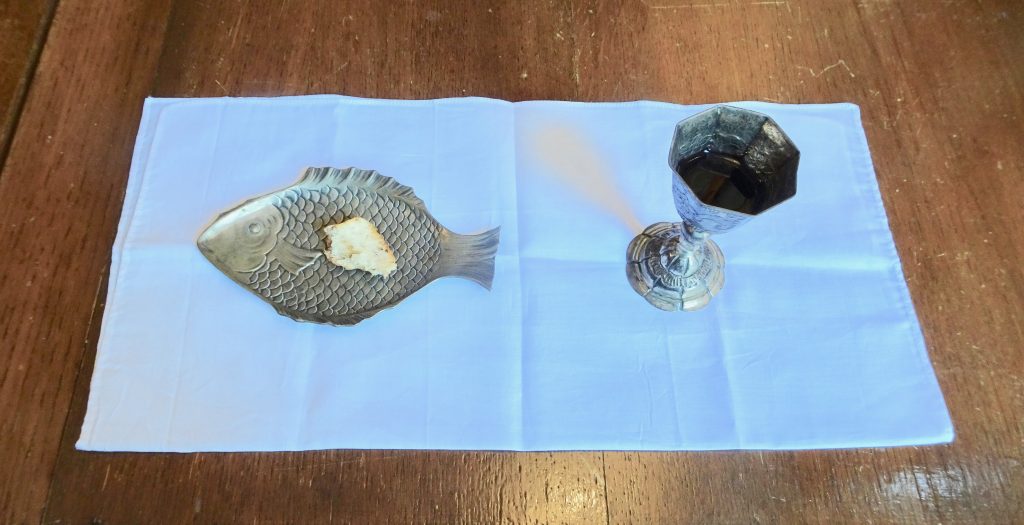
But ordinary rhythms still continue. The Wednesday Saints services which I take part in on Zoom carry on. This week we remembered St John of the Cross. His day is 14th December which happened to be a Sunday, so he got excised from the Lectionary altogether. I decided to reinstate him because he is quite inspirational.
(If you would like to take part in our small weekly service, drop me an email and I can include you).
ST JOHN OF THE CROSS
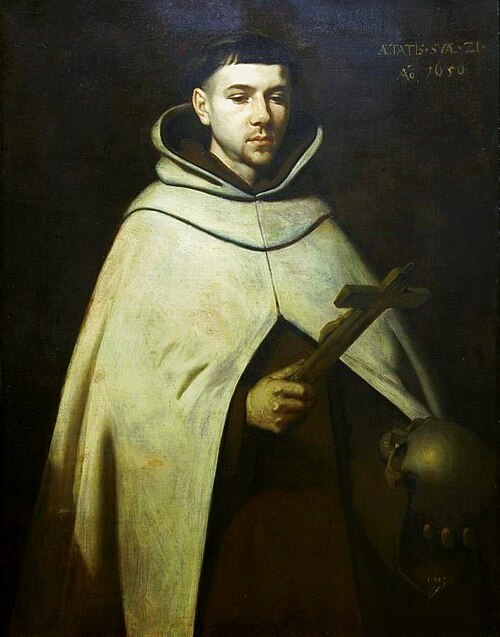
Juan de Yepes y Álvarez was born near Avila in central Spain in 1542 and died at the age of 49 in 1592. His parents were converted Jews, and were extremely poor because their relatives disapproved of his father’s marriage. At the age of ten he entered a school for 160 poor children. In 1564, at the age of 22, he joined the Carmelite friars and entered Salamanca University to study theology and philosophy, being ordained priest three years later.
At that time he met Teresa of Avila, who persuaded him to join her in reforming the Carmelite order. She aimed to bring the Carmelites back to the original simplicity of the order.
CARMELITES DIVIDED
This reformation caused a bitter dispute between the two groups of Carmelites. Those who wanted to return the simplicity of the original rule refused to wear shoes as a sign of poverty and simplicity. They were called ‘discalced’ or barefoot friars. Teresa of Avila founded several convents for discalced nuns and Juan did the same for friars.
In 1577 the ‘old’ Carmelites In 1577 effectively kidnapped Juan. He was kept in a tiny cell in severe isolation, was publicly whipped and given a diet of bread and water and a few scraps of salt fish. He stayed there eight months until he finally managed to escape. through a small window in a room adjoining his cell.
Finally in 1580 Pope Gregory authorised the separation of the old and the newly reformed Carmelites. By 1581, there were 22 houses, some 300 friars and 200 nuns among the Discalced Carmelites.
POEMS
It was in his prison cell that Juan composed his most famous poem, ‘Spiritual Canticle’ as well as other poems. They are passionate expressions of the love of God based on the Song of Songs in the Bible. They are also teachings on how to approach God through mystical vision: Juan headlined his poems as ‘Songs of the soul in rapture at having arrived at the height of perfection, which is union with God by the road of spiritual negation’.
’I entered in, I know not where,
I stayed there, knowing naught,
transcending knowledge.’
‘The higher I climbed
the less I understood
what is this dark cloud
which illuminates the night.’
In 1983 Bill Viola created a video installation called ‘Room for St John of the Cross’. I saw it in London. I have never forgotten it.
JUAN AND PRAYER
Juan, like Teresa, was passionate about seeking the immediate presence of God in contemplation. Scores of books have been written to help people become open to the ‘dazzling darkness’ of the immediate perception of God. In my view nothing has surpassed the simple four-line poem Juan wrote called ‘Suma de lo Perfección’:
Olvido do le criado,
Memoria del Criador,
Atención a lo interior
Y estarse amando al Amado.
Forgetting what is created,
Remembering the Creator,
Giving attention to what is within
And stay there, loving the Beloved.
CHRIST ON THE CROSS
Only a few of his poems are explicitly about Christ. In one of them, Christ is a shepherd lad grieving over the fickleness of his shepherdess: ‘Y el pecho del amor muy lastimado;’ ‘His breast sorely wounded by love.’
The last stanza is as follows:
‘After a long time, he climbed high up,
opened his fine arms on the tree,
And clung there, remaining dead,
his breast sorely wounded by love.
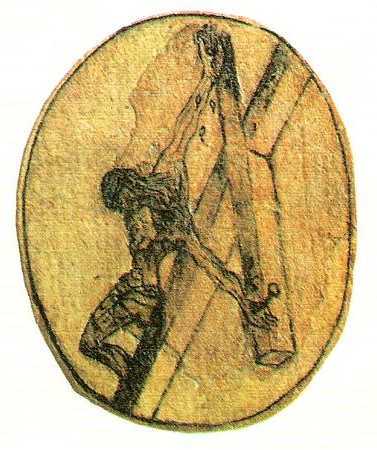
In his early thirties, Juan had a vision of the crucified Christ, which he drew immediately afterwards: It became the inspiration for Salvador Dali’s famous painting of ‘Christ of St John on the Cross’.
FROM WEDNESDAY SAINTS
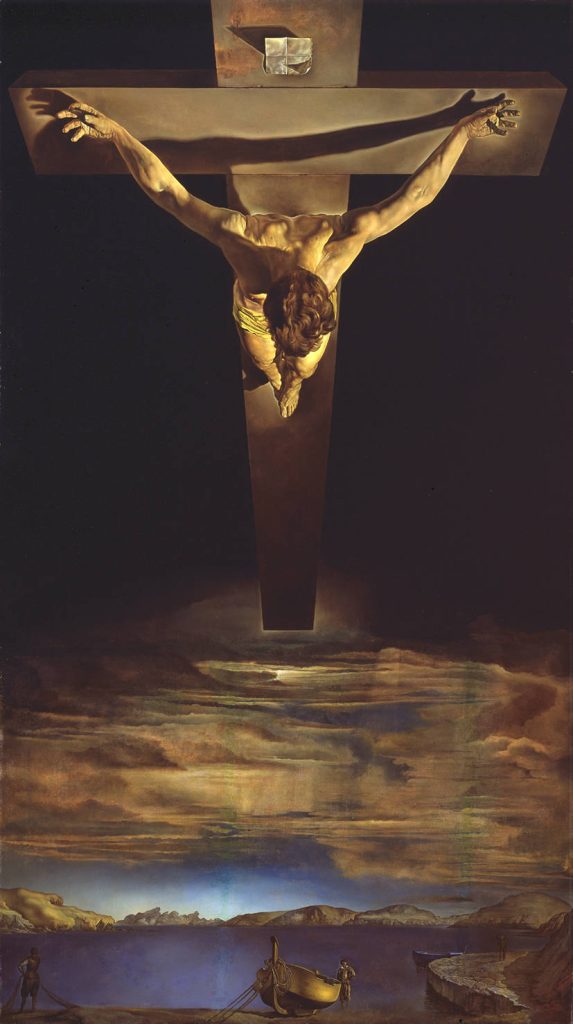
As I said at the beginning, we remembered John of the Cross on Wednesday 17th December. During the coffee and chat afterwards, Joy from Sheffield spoke of her life-changing experience when she was 15 or 16. She was walking past a shop and noticed Dali’s painting in the window. She was completely caught, could not stop gazing at it – and she was not yet a Christian. Fifty years later, she wrote this poem:
Hanging between heaven and earth
between there and here
between then and now,
lit by the setting sun
the setting Son hung,
muscles taut,
above the land He had walked
above the sea He had sailed,
hanging, visible to fishermen
visible to farmers
visible to all who would look up.
The Saviour offering salvation:
salvation stretched from shore to shore
hanging on a cross.
No crown of thorns
but soon would come
the crown of kingship
and the adoration of heaven’s hosts.
But now He must hang on
tenaciously, through the agony:
risen yet still crucified,
risen but not yet fully ascended.
The hanging Lord who takes away
the hanging sentence
hanging over us all,
that the Son might shine upon us
in all His glory.
A BLESSING
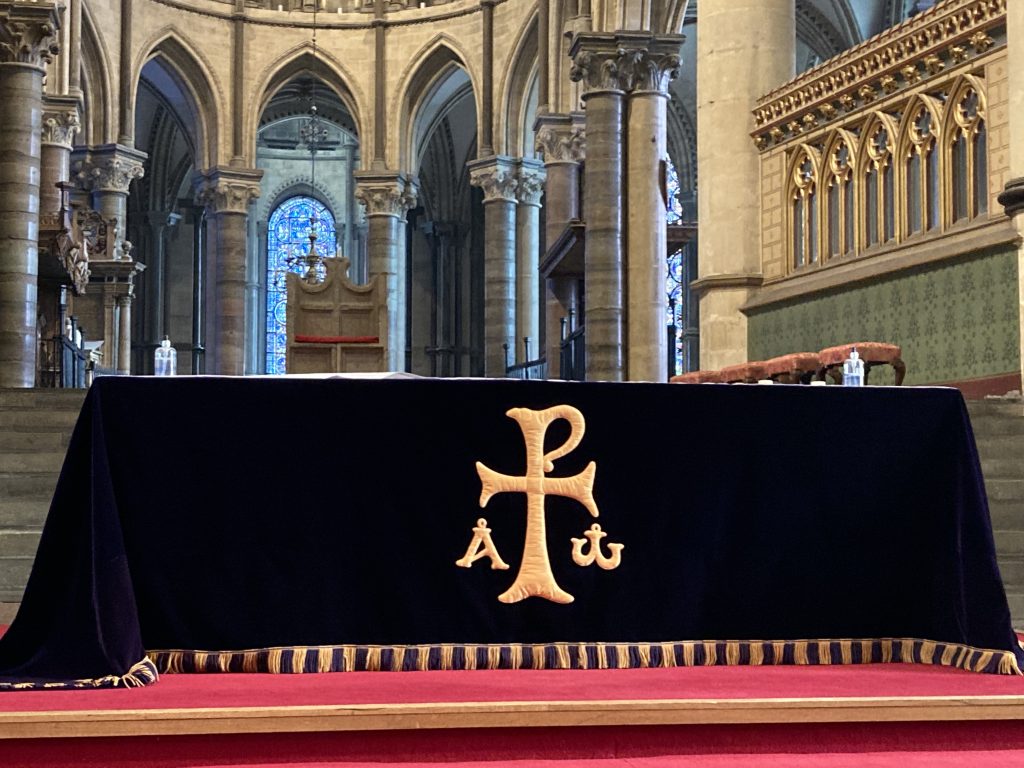
Advent in Canterbury Cathedral
Finally, while we are still in Advent, here is the Advent blessing:
May Christ, the sun of righteousness, shine upon you,
Scatter the darkness for before your path,
And make you ready to greet him when he comes in glory.
Amen.


0 Comments